AI · Tools · Online creation

Latest AI news

Every AI story worth reading, collected hourly from the labs, the tech press, research and the creator economy. Sorted by time, grouped by topic.

3,460 stories · Every headline links to the original publisher. HapnGo curates and groups; we do not copy articles.

Code & Agents Hugging Face

Welcome Le Chonk: Mistral Large 4 on Hugging Face

AI summary Mistral's new Mistral Large 4, nicknamed Le Chonk, is a Mixture-of-Experts model that takes in text and images and replies in text, with about 1T parameters in total, 49B of them active, and a 1M-token context. On the Artificial Analysis Cyber Index it hit 82% on a test of reproducing and patching vulnerabilities, and it cracked 93% of 40 Cybench challenges. Its weights come with the Mistral Ecosystem Open-Weight License, which is derived from MIT and limits model-as-a-service use, while vLLM, transformers and llama.cpp support it from day one. The Artificial Analysis Intelligence index placed it fifth among open-weight models as of October 29, 2026.

Tools & Products Hugging Face

Introducing AnySpeechRecognizer and AnyDecisionModel: Open Models for Speech and Decisions on Apple Platforms

AI summary Hugging Face has published two open-source Swift packages for Apple devices: AnySpeechRecognizer and AnyDecisionModel. The speech package copies Apple's SpeechAnalyzer interface but lets developers swap in engines such as NVIDIA's Parakeet or Alibaba's Qwen3-ASR running on Core ML, and adds speaker diarization for up to four speakers. AnyDecisionModel returns typed answers with probabilities for yes-or-no, multiple-choice and rating questions, using local backends like MLX and llama.cpp or hosted options such as Jev and Ollama. In tests on an M4 Max, Parakeet handled an hour of audio from a file in roughly 20 to 40 seconds.

Code & Agents Simon Willison

Quoting Ted Sanders

AI summary Ted Sanders of OpenAI said that while LLM abilities vary across many dimensions, model size accounts for much of the difference in performance. Larger models, he noted, tend to be more reliable, recall obscure facts better and charge more per token. He described version numbers as signalling release order, kinship with related models and how big the improvement is. A hypothetical 6.1, for example, would follow 5.6 but would not be a large enough jump to be called 7.

Creators & Marketing Search Engine Journal

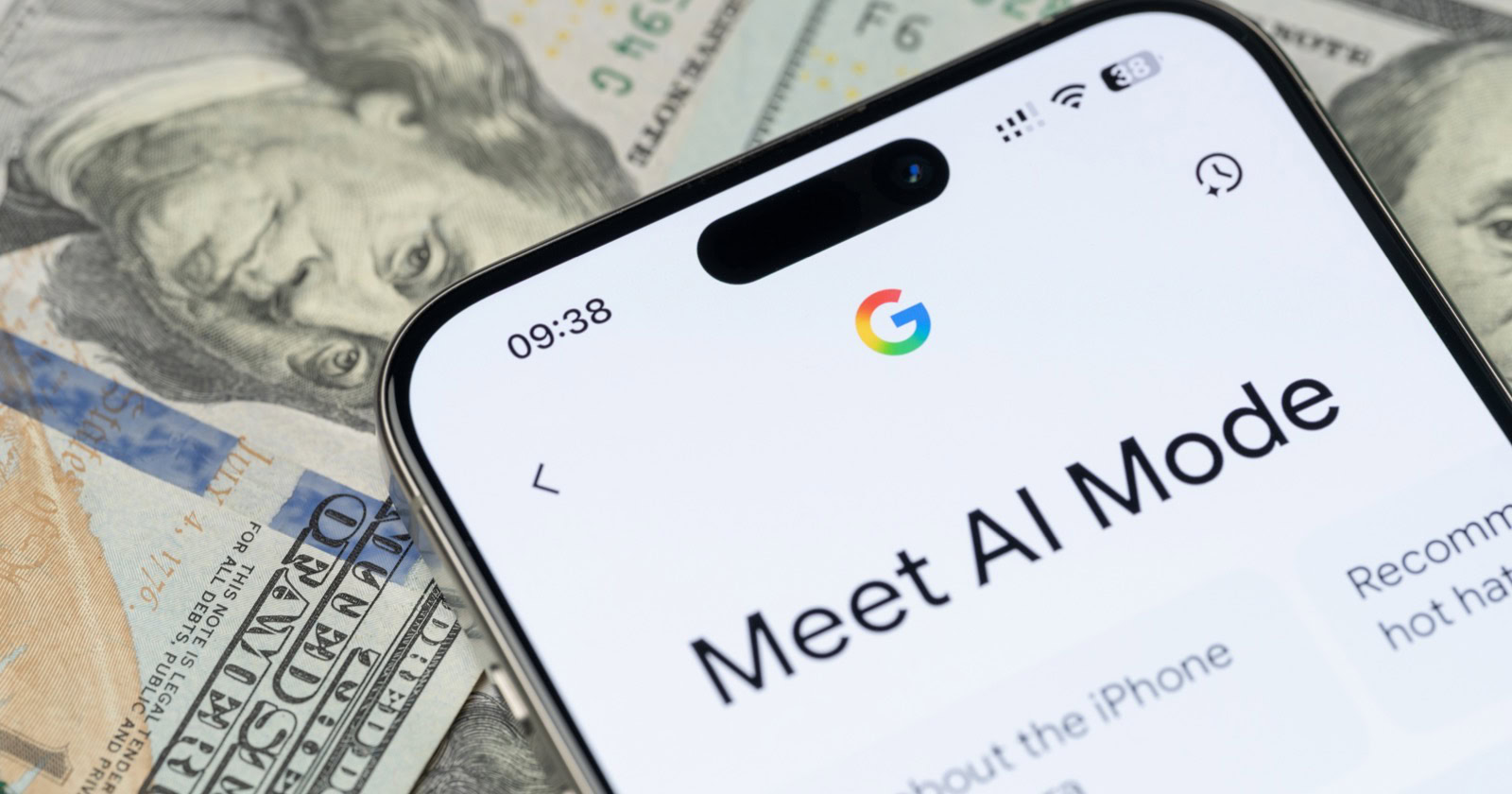
Google Says Lower AI Mode Monetization Weighed On Search Growth

AI summary Revenue from Alphabet's Search & Other segment rose 12% year over year to $63.35 billion in Q3 2026, down from growth of 19% in Q1 and 17% in Q2. Chief Business Officer Philipp Schindler said currency swings, retail and media were the main drags, while strong AI Mode query growth also weighed because those queries earn less. Google is extending AI Mode ads to ten more countries, among them India and Canada, and introducing ads in follow-up questions in the U.S. CFO Anat Ashkenazi expects a slightly bigger currency headwind in Q4, when ads should also reach Brazil, Mexico and the U.K.

Creators & Marketing Search Engine Roundtable

Google Business Profiles Finally Adds Third-Party Ordering Controls

AI summary Google now lets restaurants decide, provider by provider, which third-party ordering services show up on their Business Profile in Search and Maps. Owners can remove services such as DoorDash or Uber Eats entirely, or limit them to pickup or delivery, straight from their dashboard instead of contacting each platform. Lisa Landsman of Google shared the change on LinkedIn, calling more control over ordering links one of the most common requests from restaurant operators.

Creators & Marketing Search Engine Roundtable

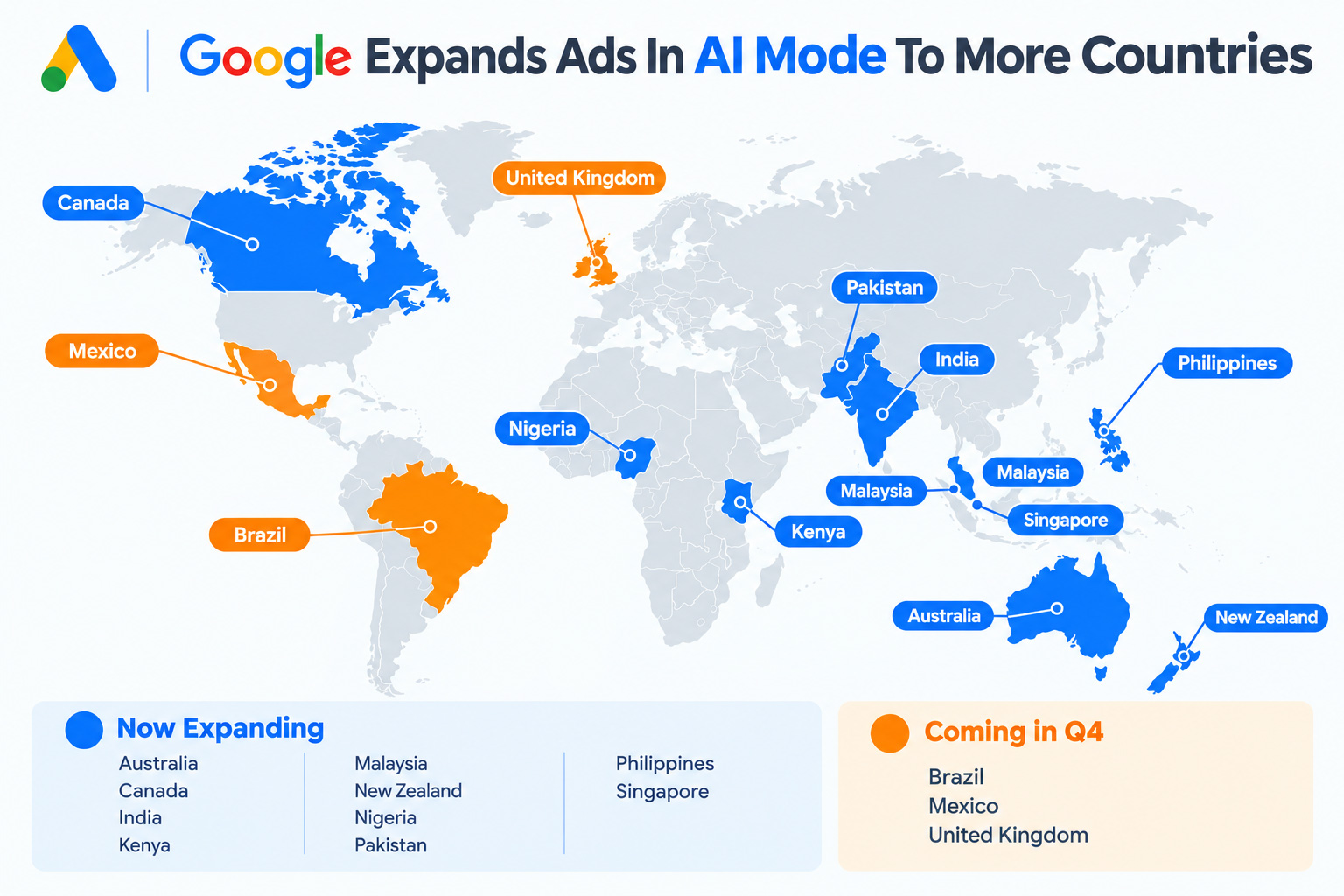
Google Expands Ads In AI Mode To More Countries & Multiturn Ads In U.S.

AI summary Google is extending advertising in its AI Mode search experience to additional markets, among them India, Canada and Australia, plus several other countries in Asia, Africa and Oceania. The United Kingdom, Mexico and Brazil are slated to follow in Q4. In the U.S., the company is introducing multiturn ads that can appear in answers to follow-up questions during AI Mode conversations, labeled as "Sponsored." Google, which first put ads in AI Mode in May 2025, says click-through rates for sponsored and organic product listings there are already comparable.

Creators & Marketing Search Engine Journal

WordPress Announces Another Security Release: Version 7.1.4

AI summary WordPress has issued version 7.1.4 to address 22 security vulnerabilities, many of them stored cross-site scripting bugs. The most serious is a race condition in core updates, found by researcher Umut Bayram, that could enable remote code execution while an upgrade is running. Other issues touch the Interactivity API, blocks, the Customizer and admin screens, though many need Contributor-level access or above. Some of the fixed flaws reach back to WordPress 4.7.

Creators & Marketing Search Engine Journal

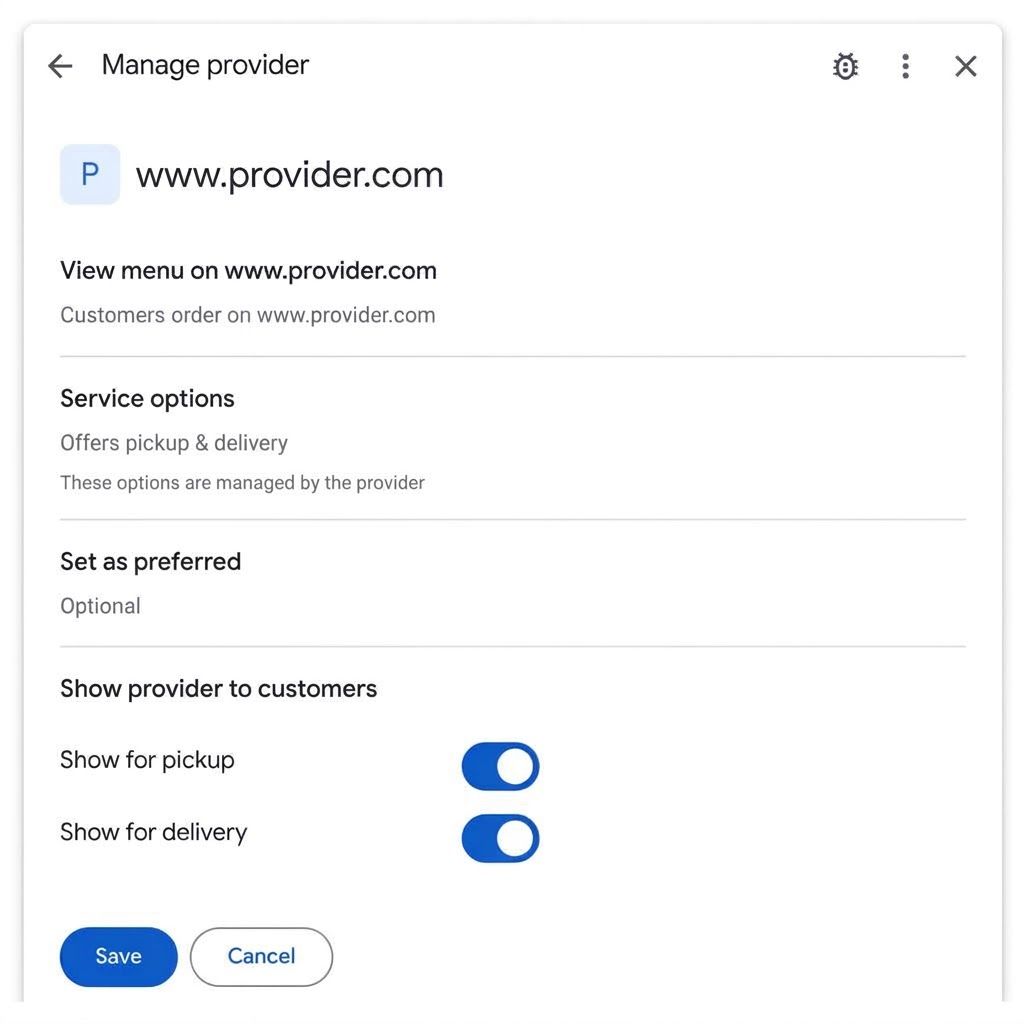
Google Gives Restaurants Direct Control Over Ordering Providers

AI summary Google has added a setting in the Business Profile dashboard that lets restaurants hide specific third-party ordering providers from their listings on Search and Maps, with separate toggles for pickup and delivery. Lisa Landsman announced the change on LinkedIn, and a Google product manager said it is available in every country. Previously, removal requests had to be handled by the provider, which had five business days to act. Google's updated policy, revised Oct. 19, says all partner integrations remain switched on by default.

Creators & Marketing Search Engine Journal

Pages AI Cited Got Straight To The Answer More Often, Data Shows

AI summary TJ Robertson of TJ Digital examined 193,507 responses from ChatGPT, AI Overviews and Google AI Mode covering 4,167 unbranded questions, gathered between August 27 and October 21, 2026. In blind ratings, 20% of cited pages opened with a direct answer, against 5% of Google top-10 pages the AI never retrieved; a separate round found 23% versus 14% for retrieved but uncited pages. Titles containing a year more than doubled the odds of citation, while recent dates added 88% and tables 69%, though bylines were linked to 28% lower odds. Robertson describes the results as associations, not proof that these traits cause citations.

Free, daily

The HapnGo Briefing, in your inbox

One email a day with the AI stories that matter, why they matter, and one tool worth trying. No spam, one-click unsubscribe.

We only use your address to send the briefing and, if you vote, to count one vote per reader. Privacy.