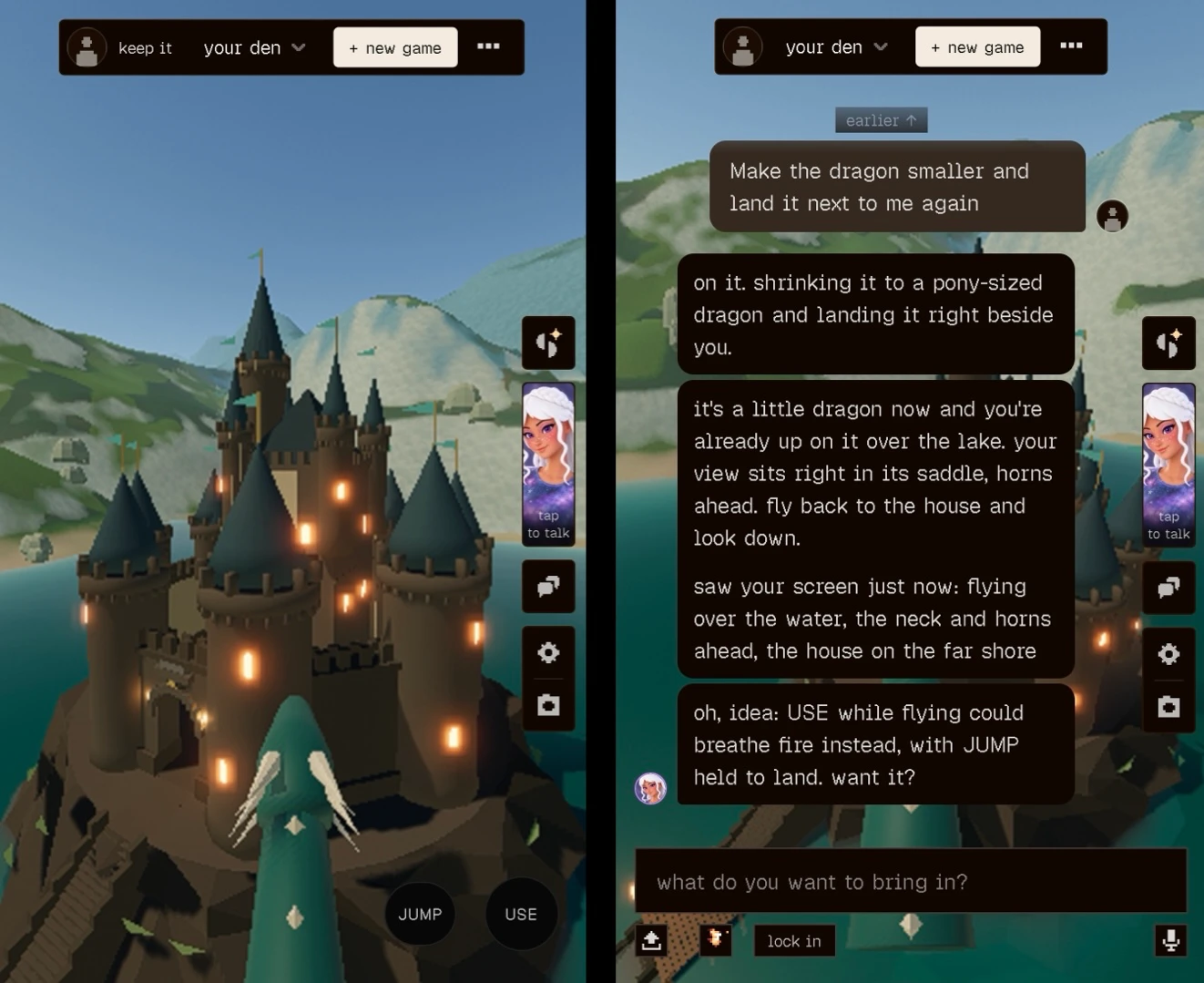
Only a couple hours at this, taking shape. Hardest thing is the layout what to include. Back-end is complete, just need a face, Ive been running my voice agent in the background for a while with no interface. What you…
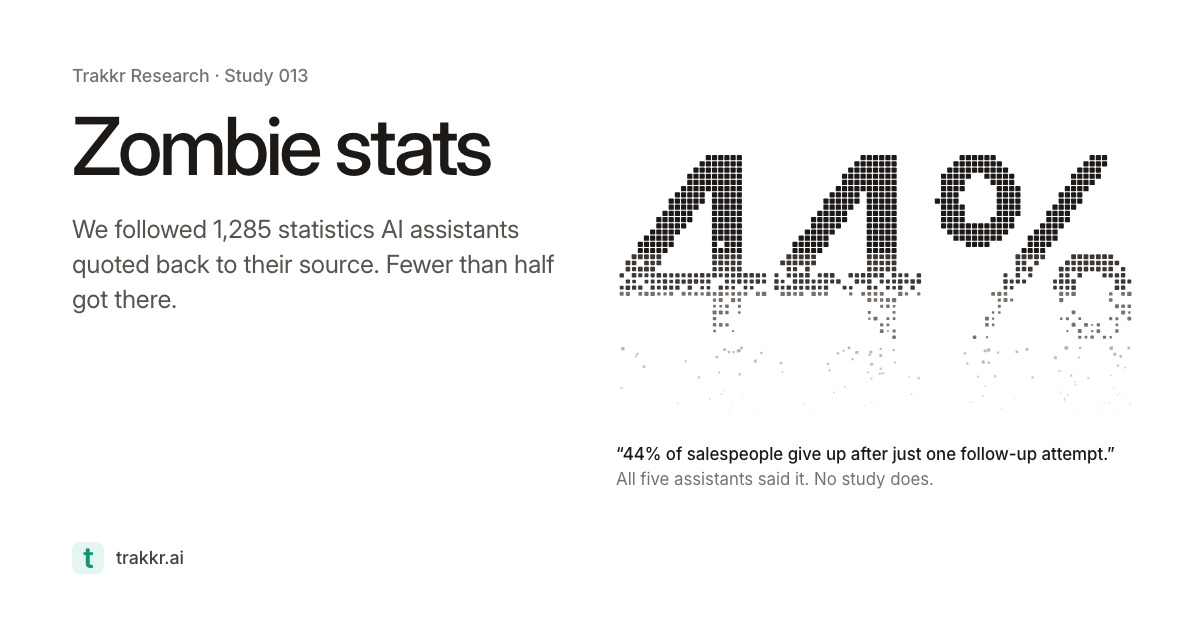
AI summary Researchers posed 200 number-seeking questions, of the sort people ask daily, to ChatGPT, Gemini, Claude and other assistants including Perplexity and Google's AI Overviews. They then followed each cited source, and the sources behind those, to find where the figures originated. Advice and prices were excluded; only shares, rates, averages, counts and costs stated as fact were counted. One example traced the claim that 44% of salespeople stop after a single follow-up.
AI summary The US Justice Department is reviewing whether Nvidia's planned $12.93 billion purchase of Hugging Face could hand it control of a central AI distribution platform and harm rivals, according to two sources cited by Reuters. Nvidia expects the acquisition to be completed in the first half of 2027. A broader antitrust probe, begun under Joe Biden and continued under Donald Trump, covers Nvidia's sales tactics, its Groq licensing arrangement and its takeovers of Run:ai and SchedMD. In France, the competition authority is separately investigating the chipmaker over reliance on its CUDA software and its stakes in cloud firms such as CoreWeave.
AI summary Mistral has released open weights for an improved Mistral Large 4, nicknamed Le Chonk, a natively multimodal model with 1 trillion parameters that entered public preview earlier this month. After three more weeks of reinforcement learning, it scores 41% on Terminal-Bench 4.0, up 13 points with 30% fewer output tokens, and leads Cognition's FrontierCode 2.0 at 19.7%. It reaches 51% on the Artificial Analysis Cyber Index and refuses malicious cyber requests 96.6% of the time on average. The model offers three reasoning modes, and partners such as Orange Cyberdefense get preview access to a security-focused variant.
AI summary Hugging Face has unveiled Project ProtoStar, which brings together universities, the Astera Institute and the ORCA community group to release publicly funded datasets, models and code in formats suited to AI. Founding academic members include Carnegie Mellon, Purdue and three other US universities working via the Open Forum for AI. The first open challenge, run by Carnegie Mellon from November 2 to 13, 2026, asks teams to forecast climate indicators for 210 U.S. cities for 2019–2026 using records up to 2018. Hugging Face says it already hosts over 17,000 public datasets in core science fields, and final challenge results are expected in early 2027.
AI summary Mistral's new Mistral Large 4, nicknamed Le Chonk, is a Mixture-of-Experts model that takes in text and images and replies in text, with about 1T parameters in total, 49B of them active, and a 1M-token context. On the Artificial Analysis Cyber Index it hit 82% on a test of reproducing and patching vulnerabilities, and it cracked 93% of 40 Cybench challenges. Its weights come with the Mistral Ecosystem Open-Weight License, which is derived from MIT and limits model-as-a-service use, while vLLM, transformers and llama.cpp support it from day one. The Artificial Analysis Intelligence index placed it fifth among open-weight models as of October 29, 2026.
AI summary Ted Sanders of OpenAI said that while LLM abilities vary across many dimensions, model size accounts for much of the difference in performance. Larger models, he noted, tend to be more reliable, recall obscure facts better and charge more per token. He described version numbers as signalling release order, kinship with related models and how big the improvement is. A hypothetical 6.1, for example, would follow 5.6 but would not be a large enough jump to be called 7.